Email:export@gzliyin.com
WhatsApp:+8613902386325
Email:export@gzliyin.com
WhatsApp:+8613902386325
En los interiores modernos de hoy (oficinas, restaurantes, aulas, cines en casa y casas de planta abierta), la gente a menudo se queja del mismo problema:
“Puedo oír voces, pero no puedo entender lo que dice la gente”.
Este problema no siempre es causado por ruidos fuertes. En muchos casos, es causado por mala acústica, especialmente el eco y la reverberación excesivos. Es aquí donde los paneles acústicos se convierten en una solución esencial.
En este artículo te lo explicaremos Cómo los paneles acústicos mejoran la claridad del habla, por qué es importante la inteligibilidad del habla y cómo soluciones profesionales como paneles acústicos de listones de madera Puede crear un entorno más cómodo y productivo.
La arquitectura moderna suele priorizar el minimalismo y el diseño de espacios abiertos. Si bien esto resulta elegante, también plantea desafíos acústicos.
Muchos interiores incluyen superficies duras reflectantes como:
mamparas de cristal
muros de hormigón
pisos de madera
baldosas de cerámica
techos expuestos
grandes paredes vacías
Estos materiales reflejan las ondas sonoras en lugar de absorberlas. Cuando las personas hablan, su voz rebota por la habitación y se superpone consigo misma, lo que provoca que el habla suene confusa o borrosa.
Esto se conoce como reverberación.
La claridad del habla se refiere a la facilidad con la que los oyentes pueden comprender las palabras habladas en un espacio. Los ingenieros acústicos suelen describir esto como inteligibilidad del habla.
Una sala con buena claridad de voz permite que las conversaciones se sientan naturales, incluso a un volumen de voz normal.
Una sala con poca claridad de voz obliga a las personas a:
hablar más alto
se repiten
sentirse cansado durante las reuniones
perder la concentración durante las lecciones
malinterpretar información importante
Con el tiempo, esto se convierte en un problema importante de comodidad y productividad.
Para entender cómo ayudan los paneles acústicos, primero es necesario comprender qué causa la mala claridad del habla.
El eco es una repetición distinta del sonido causada por reflejos de superficies distantes.
La reverberación es la acumulación continua de sonido reflejado en una habitación. Es más común que el eco y suele hacer que las voces suenen poco claras.
Cuando el tiempo de reverberación es demasiado largo, las palabras habladas se superponen y se vuelven difíciles de entender, especialmente en entornos concurridos como oficinas, restaurantes o aulas.
Los paneles acústicos están diseñados para absorber la energía sonora en lugar de reflejarla. Esto reduce las reflexiones sonoras y controla la reverberación.
Así es exactamente cómo mejoran la claridad del habla:
Cuando las ondas sonoras impactan una superficie dura (como vidrio u hormigón), rebotan en la habitación.
Los paneles acústicos reducen estos reflejos al absorber el sonido, lo que evita que las señales de voz reboten y se superpongan.
Resultado: El habla se vuelve más nítida y limpia.
Tiempo de reverberación (a menudo medido como RT60) es el tiempo que tarda el sonido en desvanecerse 60 dB después de que la fuente se detiene.
Una habitación con un RT60 alto hace que el sonido del habla sea borroso.
Al instalar paneles acústicos, se reduce el RT60, creando un entorno de escucha más claro.
Resultado: Menos “ruido ambiental” y conversaciones más inteligibles.
En un entorno ruidoso, el oyente necesita distinguir el habla del ruido de fondo. Esto depende en gran medida de... relación señal-ruido.
Cuando los paneles acústicos absorben los reflejos, reducen la acumulación de ruido no deseado en el espacio.
Resultado: Las voces se destacan más claramente de los sonidos ambientales.
En salas con mala acústica, las personas, inconscientemente, alzan la voz para hacerse entender. Esto provoca tensión vocal, especialmente en:
oficinas abiertas
aulas
restaurantes
salas de reuniones
El tratamiento acústico ayuda a reducir la necesidad de gritar.
Resultado: Mayor comodidad para empleados, profesores e invitados.
La claridad del habla no solo se trata de comodidad: también afecta el rendimiento, la seguridad y la experiencia del cliente.
La falta de claridad en el habla provoca:
reuniones ineficientes
errores de comunicación
productividad reducida
estrés y fatiga mental
Los paneles acústicos ayudan a las oficinas a crear un entorno profesional donde las personas pueden comunicarse con claridad.
Muchos clientes abandonan los restaurantes porque sienten que el espacio es demasiado ruidoso. Incluso cuando los niveles de ruido no son extremos, la reverberación puede dificultar la conversación.
Los paneles acústicos reducen la reverberación y mejoran el ambiente del comedor.
Mejor claridad del discurso = mayor satisfacción del cliente.
Los estudiantes necesitan comprender claramente a los profesores. En aulas con alta reverberación, los niños tienen dificultad para concentrarse y los profesores deben hablar más alto.
Los paneles acústicos ayudan a crear un entorno de aprendizaje eficaz.
Los hospitales y clínicas requieren una comunicación fluida entre el personal y los pacientes. Una mala acústica puede aumentar el estrés y dar lugar a malentendidos.
Los paneles acústicos mejoran la privacidad y la claridad del habla en las salas de consulta.
La claridad del habla es fundamental al ver películas. Si el diálogo suena poco claro, se aumenta el volumen, lo que genera incomodidad.
Los paneles acústicos pueden mejorar la calidad del sonido y la claridad del diálogo.
Esta es una confusión común.
mejorar el sonido dentro de una habitación
reducir el eco y la reverberación
mejorar la claridad del habla
reflexiones de control
Bloquea el sonido que entra o sale de una habitación.
requiere materiales de construcción pesados
Se centra en el aislamiento en lugar de la claridad
Para mejorar la claridad del habla, Los paneles acústicos son la solución correcta.
Diferentes materiales y estructuras afectan el rendimiento acústico.
Estos paneles absorben bien las frecuencias medias y altas, mejorando la claridad del habla. Son comunes en oficinas y escuelas.
Ligero, ecológico y eficaz para interiores comerciales.
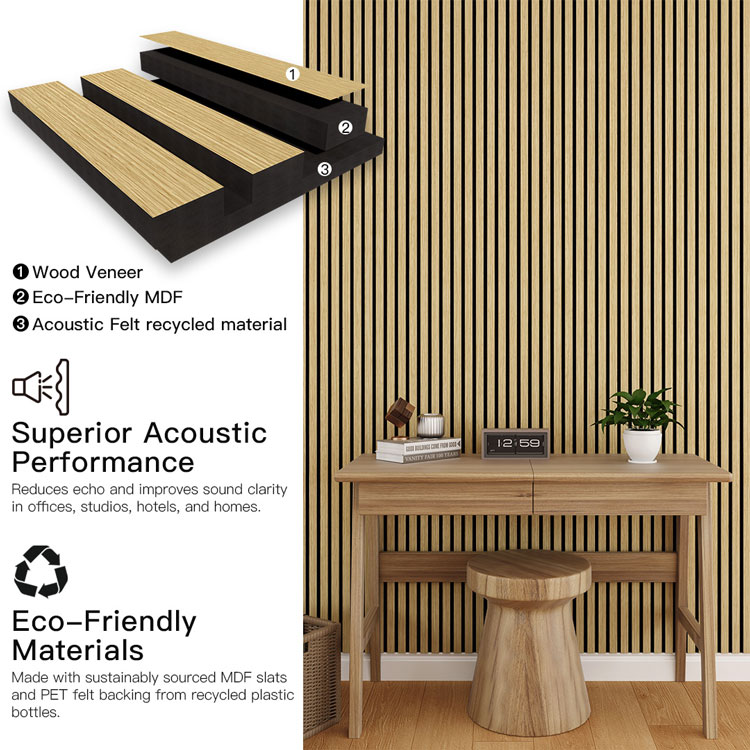
Los paneles de lamas de madera combinan diseño decorativo con rendimiento acústico. Las lamas cuentan con un respaldo de fieltro acústico que absorbe las reflexiones del sonido.
Son especialmente populares en:
oficinas
restaurantes
hoteles
salas de conferencias
espacios comerciales
interiores residenciales modernos
Sí. Paneles acústicos de listones de madera son altamente eficaces para mejorar la claridad del habla cuando se diseña correctamente.
Funcionan combinando:
listones de madera (para difusión y diseño)
respaldo de fieltro acústico (para absorción)
Aislamiento opcional detrás de los paneles (para un mayor rendimiento)
Esta combinación reduce los reflejos manteniendo una apariencia arquitectónica de primera calidad.
A diferencia de las soluciones básicas de espuma, los paneles de listones de madera son adecuados para entornos comerciales porque son:
durable
Fácil de mantener
visualmente atractivo
altamente personalizable
La colocación es fundamental. Incluso los paneles de alta calidad no funcionarán bien si se instalan incorrectamente.
techos en espacios abiertos
paredes detrás de las zonas de asientos
paredes laterales en salas de reuniones
paredes opuestas a ventanas de vidrio
zonas cercanas a fuentes de ruido (cafeterías, restaurantes, impresoras de oficina)
Un enfoque profesional común es tratar primeros puntos de reflexión, donde el sonido rebota directamente en el área de escucha.
No existe una solución única para todos, pero en la mayoría de los casos, mejorar la claridad del habla requiere tratar:
20%–35% de la superficie total de paredes y techos
Los espacios con superficies duras y techos altos pueden requerir:
35%–50% cobertura para obtener mejores resultados
El objetivo es reducir la reverberación sin que la sala suene “demasiado muerta”.
Al seleccionar paneles acústicos para la claridad del habla, tenga en cuenta estos factores clave:
Los paneles más gruesos absorben más sonido de baja frecuencia, pero la claridad del habla depende principalmente del control de frecuencia media.
Los materiales de núcleo de alta calidad proporcionan una absorción estable y un rendimiento a largo plazo.
El NRC indica la cantidad de sonido que absorbe un panel en promedio. Un NRC más alto generalmente significa una mejor reducción del eco.
El montaje directo en las paredes en lugar de utilizar un espacio de aire puede afectar el rendimiento de absorción.
En Acústica Leeyin de GuangdongNos especializamos en la fabricación de productos de primera calidad. Paneles de pared de listones de madera y paneles acústicos Para proyectos residenciales y comerciales globales.
Somos uno de los principales exportadores de China en la industria de paneles acústicos de listones de madera y brindamos un suministro confiable a importadores, mayoristas, contratistas y diseñadores de interiores de todo el mundo.
Instalación de producción moderna de 20.000㎡
Fuerte capacidad de producción en masa para proyectos a gran escala
estricto control de calidad basado en estándares internacionales
Acabado de chapa estable y alineación uniforme de las lamas
Colores, tamaños y embalajes personalizables
Apoyo logístico listo para la exportación a los mercados globales
Ya sea que su proyecto requiera un diseño acústico moderno para oficinas, espacios de hospitalidad o interiores de viviendas, brindamos soluciones profesionales que combinan Rendimiento sonoro y arquitectónico
ETIQUETAS :

Teléfono / Whatsapp : +86 13902386325 / +86 13902386325
Correo electrónico
:
export@gzliyin.com


© 2026 Tecnología acústica Co., Ltd. de Guangdong Liyin Reservados todos los derechos.

Hi! Click one of our members below to chat on


